What Is PPV Advertising? How Pay-Per-View Ads Work (2027)
Not every advertising campaign is built around clicks or impressions. Some are designed to get people to view a particular page, offer or piece of content. That’s where pay-per-view (PPV) advertising comes in.
PPV advertising is a digital marketing model in which advertisers pay for each qualifying view or visit, depending on how the campaign and network define the action. It gives marketers another way to drive traffic, reach niche audiences and promote specific offers. However, understanding how the model works is important before investing in it.
In this guide, we’ll look at what PPV advertising is, how it works, the networks that offer it, how much it costs and what you should consider before running a campaign.
What does PPV mean?
PPV advertising is a paid traffic model where you pay each time your ad is viewed, not each time it’s clicked. Before going further, it helps to know that “PPV” means different things depending on who’s searching:
- In advertising, PPV (pay-per-view) means buying ad views, usually as full-page pop-unders, redirects, or video ads. This guide is about this meaning.
- In streaming and TV, pay-per-view means paying once to watch a single event, like a boxing match or concert.
- In finance and procurement, PPV stands for purchase price variance, the gap between the expected and actual cost of goods.
For marketers, PPV advertising is one of the cheapest ways to buy attention at scale. It’s also one of the easiest to waste money on. This guide explains how pay-per-view ads work, what they cost, which businesses they suit, and how to run a safe first test in 2027.
How PPV and CPV advertising works?
PPV advertising and CPV (cost-per-view) advertising are the same model. Advertisers tend to say CPV and affiliates tend to say PPV. Either way, you bid a price per view, and the network shows your landing page or video to users who match your targeting.
The key difference from search ads is that the user didn’t ask for your ad. Your page appears in front of them, often full-screen, while they’re doing something else. That makes PPV cheap and high-volume, but it means your page has seconds to earn attention.
The main PPV ad formats
- Pop-unders and pop-ups. Your landing page opens in a new window or tab, either behind or in front of the page the user is visiting. This is the classic PPV format and usually the cheapest.
- Domain redirects. When someone types in an expired or parked domain, they’re sent straight to your page. Because the user typed a related domain, this traffic is often more relevant than pop traffic, and it costs more.
- In-video ads. Video ads that play before, during, or after other content are also bought on a cost-per-view basis. YouTube in-stream ads bought through Google Ads are the best-known example.
- Interstitials and in-page formats. Full-page or in-page units that appear between page loads or inside the content, sold per view by many networks.
PPV vs. PPC vs. CPM
PPV buys a full-page view, PPC buys a click, and CPM buys a thousand ad impressions. The right choice depends on whether you need intent, volume, or reach.
| Model | You pay for | Typical placement | User intent | Best for |
|---|---|---|---|---|
| PPV / CPV | Each view of your page or video | Pop-unders, domain redirects, video ads | Low to medium; the user wasn’t searching | Cheap volume, offer testing, retargeting-style reach |
| PPC | Each click | Search ads, shopping ads | High; the user searched for it | Leads and sales from active demand |
| CPM | Every 1,000 impressions | Display banners, social feeds | Low; passive browsing | Brand awareness and reach |
One way to think about it: a CPV bid multiplied by 1,000 equals the CPM you’re effectively paying. A PPV view also takes over the whole screen, which a banner impression doesn’t. If you need buyers who are already searching, start with PPC. Add PPV when you want cheaper volume on top.
How much does PPV advertising cost?
Pop traffic is often quoted at a fraction of a cent per view, roughly $0.001 to $0.015, depending on country, device, and traffic quality. Domain redirect traffic usually costs more per view because it’s more targeted. Video CPV on major platforms sits much higher, since the viewer actually watches the ad. Treat these as rough industry ranges; real bids move with competition.
Cheap views can still burn a budget fast. At $0.005 a view, $100 buys about 20,000 page loads. If those views don’t convert, you’ve spent $100 learning that. That’s why careful targeting and small tests matter more than the headline price.
Targeting options
Most PPV networks let you narrow traffic by:
- Country, region and language
- Device, operating system and browser
- Time of day and day of week
- Keywords or source categories, such as sports, finance or tech sites
- Specific sources, with the ability to block poor sources and keep good ones
Source-level control is the most important lever. Most profitable PPV campaigns are built by cutting sources that don’t convert and raising bids on the few that do.
Which businesses is PPV advertising good for?
PPV works best for simple offers that someone can say yes to in seconds, usually with a low price or a free sign-up. It struggles with complex, high-trust purchases.
Good fits:
- Apps, software, and browser extensions, where the ask is a quick install or free trial
- Ecommerce flash sales and impulse products under a modest price point
- Lead generation with short forms, such as quotes, sweepstakes, or newsletter sign-ups
- Gaming and entertainment, including streaming services and mobile games
- Affiliate offers, which is where PPV traffic is most widely used
Poor fits:
- Healthcare, legal and financial services, where trust and compliance matter and pop formats can look spammy
- B2B services with long sales cycles
- Premium brands that need tight control over where their ads appear
If you’re in a poor-fit category, YouTube in-stream CPV is usually the safer way to buy views.
The risks: bot traffic and brand safety
The biggest PPV risks are paying for views from bots and having your brand appear next to content you’d never choose. Both are manageable, but only if you plan for them before you spend.
- Bot and fraudulent traffic. Some sources inflate views with automated traffic. Watch for very high view counts with near-zero time on page, scroll depth or conversions. Use a click tracker or fraud-detection tool, and block any source that sends views without engagement.
- Brand safety. Pop traffic often comes from streaming, download, and adult-adjacent sites. Ask networks which categories you can exclude, and avoid broad “run of network” campaigns if your brand is sensitive.
- Ad blockers and browser restrictions. Modern browsers block many pop-ups by default, so available volume varies by browser and device.
- User experience. An unexpected full-page ad can annoy people. A slow or pushy landing page turns that annoyance into a lasting bad impression.
- Compliance. Your landing page still needs clear pricing, privacy terms, and honest claims. Misleading pages can get your account banned and damage your brand.
How to launch your first PPV campaign
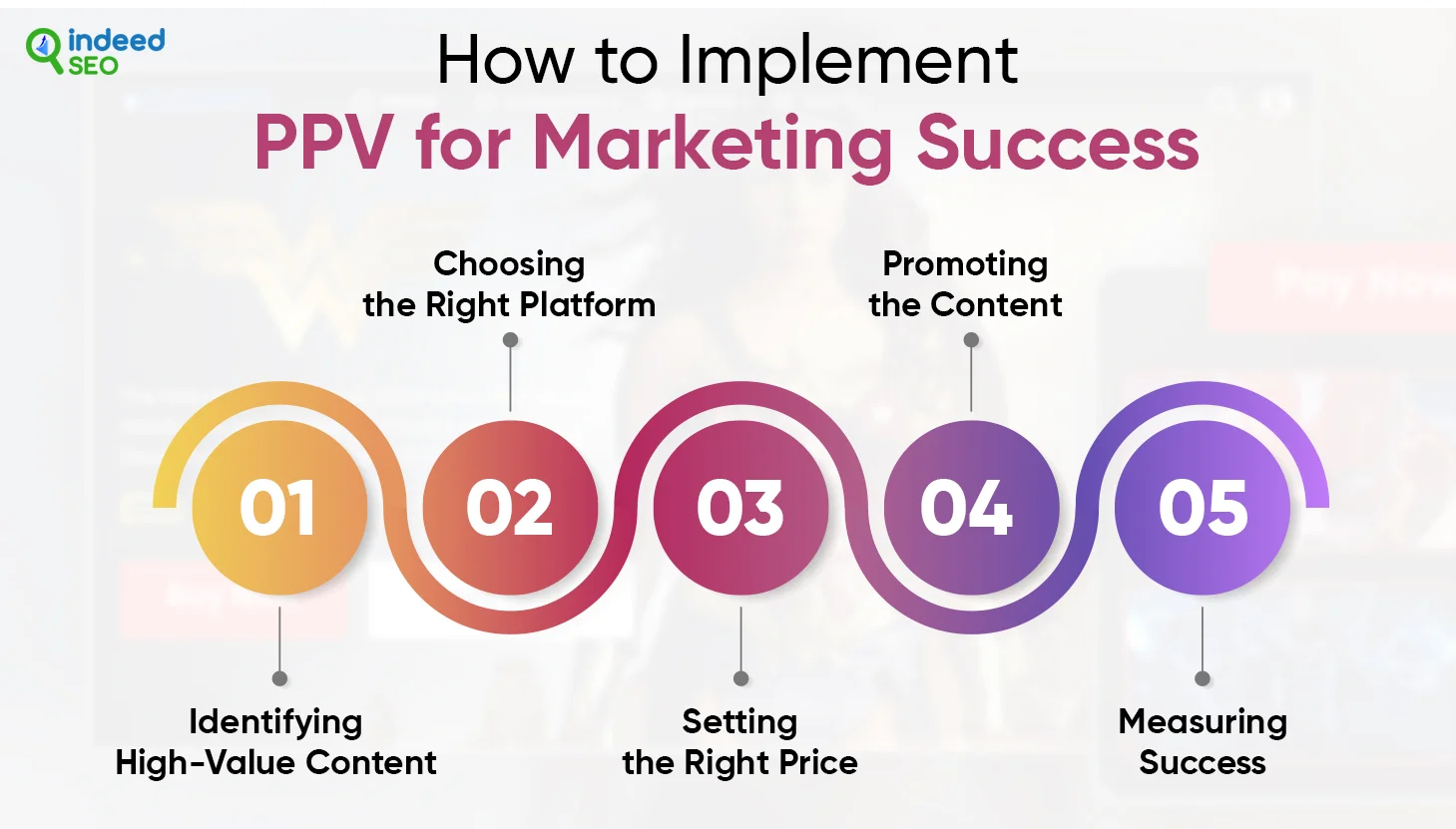
Start small, track everything, and treat the first week as research, not as a campaign you expect to profit from.
- Pick one simple offer. Choose a free trial, a short form, or a low-priced product with a single clear action.
- Build a fast, focused landing page. It should load in under two seconds on mobile, state the offer in one line above the fold, and have one call to action.
- Set up conversion tracking first. Use a tracker or your analytics platform with postback or pixel tracking, so you can see conversions by source.
- Narrow your targeting. Start with one country, one device type, and one traffic type, either pop or domain redirect.
- Set a small daily budget. Many advertisers start around $10–$20 a day per campaign while they collect data.
- Cut and keep. After a few days, block sources with views but no engagement, and raise bids on sources that convert.
- Test one variable at a time. Change the headline, the offer, or the targeting, never all three at once.
- Scale slowly. Increase budgets gradually on proven sources, and keep watching cost per conversion, not cost per view.
What is PPV content?
PPV content is premium material that viewers pay for individually, rather than as part of a subscription. Examples include live sports and fight events, concerts, paid webinars, masterclasses, and exclusive creator videos.
For businesses, PPV content is a revenue model, while PPV advertising is a way to buy traffic. The two can work together. A brand selling a paid webinar can use PPV or PPC ads to fill seats, then use the webinar itself to sell a higher-value product. If you sell premium content, promote it where buyers already pay attention, through search, video and social campaigns, rather than relying on pop traffic alone.
PPV advertising in 2027: What to plan for
In 2027, expect PPV budgets to keep moving from classic pop traffic toward video views and better-verified sources. Here’s what to plan for:
- Video CPV keeps growing. Advertisers increasingly buy views on YouTube, connected TV and short-form video, where views are easier to verify than pop impressions.
- Tracking is server-side by default. As browsers restrict third-party cookies and scripts, server-to-server postbacks and first-party analytics are becoming standard for measuring PPV conversions.
- Fraud filtering is a buying criterion. Networks that can show independent fraud filtering and transparent source reports will earn more budget than the cheapest bidder.
- Browsers keep tightening. Pop-up and redirect blocking keeps improving, so pop inventory is likely to shrink and get more expensive on major browsers.
- Automated bidding spreads. More networks now offer rule-based or AI-assisted bidding that pauses weak sources automatically. It saves time, but you still need clean conversion data for it to work.
Get expert help with PPV advertising
PPV can deliver cheap, scalable traffic, but only with tight targeting, clean tracking, and constant source optimization. IndeedSEO’s PPV marketing services handle network selection, landing pages, fraud filtering, and daily optimization, so your budget goes to views that convert.
Not sure PPV fits your offer? Our pay-per-click advertising team can compare PPV, search, and video for your goals and build a mix that works for 2027.

FAQs
What is PPV in marketing?
In marketing, PPV usually means pay-per-view advertising, where you pay each time your ad or landing page is shown. It’s also called CPV, or cost-per-view.
Is PPV advertising the same as CPV advertising?
Yes. PPV and CPV describe the same pricing model. Affiliates tend to say PPV, while ad platforms and advertisers more often say CPV.
Is PPV traffic good quality?
It varies widely by source. Some PPV sources convert well for simple offers. Others are full of bots or uninterested users. Quality depends on tracking conversions and blocking weak sources quickly.
How much budget do I need to test PPV ads?
Many advertisers test with around $10–$20 a day per campaign for a week or two. That’s usually enough to find which sources convert before scaling.
Is PPV better than PPC?
Neither is better overall. PPC reaches people actively searching, so it converts better for most service businesses. PPV is cheaper and higher-volume, so it suits simple offers, testing, and extra reach.
PakarPBN
A Private Blog Network (PBN) is a collection of websites that are controlled by a single individual or organization and used primarily to build backlinks to a “money site” in order to influence its ranking in search engines such as Google. The core idea behind a PBN is based on the importance of backlinks in Google’s ranking algorithm. Since Google views backlinks as signals of authority and trust, some website owners attempt to artificially create these signals through a controlled network of sites.
In a typical PBN setup, the owner acquires expired or aged domains that already have existing authority, backlinks, and history. These domains are rebuilt with new content and hosted separately, often using different IP addresses, hosting providers, themes, and ownership details to make them appear unrelated. Within the content published on these sites, links are strategically placed that point to the main website the owner wants to rank higher. By doing this, the owner attempts to pass link equity (also known as “link juice”) from the PBN sites to the target website.
The purpose of a PBN is to give the impression that the target website is naturally earning links from multiple independent sources. If done effectively, this can temporarily improve keyword rankings, increase organic visibility, and drive more traffic from search results.